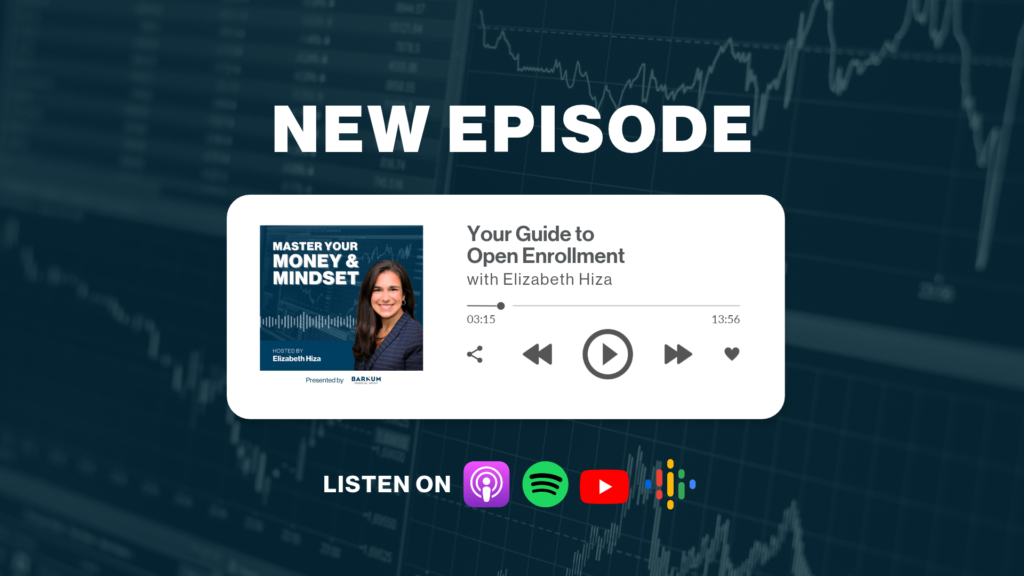
Open enrollment only comes around once a year and most people treat it like a form to fill out instead of the financial opportunity it actually is. In this episode, Elizabeth Hiza breaks down the three things you should be reviewing before your enrollment window closes: your retirement contributions (including updated limits and catch-up provisions for 2026), your healthcare plan and whether a Health Savings Account could be working harder for you, and your beneficiary designations, the one that most people skip entirely but absolutely shouldn’t. If you’ve been meaning to actually pay attention during open enrollment this year, this episode is your starting point.
Barnum Financial Group presents Master Your Money and Mindset, a client-facing podcast that helps empower listeners to master their money by also mastering their mindset. Host Elizabeth Hiza, Chief Marketing Officer with Barnum Financial Group, focuses on the importance of discipline and your mindset and how your attitude towards money influences your financial decisions and actions.
Title/Theme: Your Guide to Open Enrollment
Make sure to subscribe wherever you listen to your podcasts.
Follow us on our Instagram: @barnumfinancialgroup